Coastal Kitchen Design Styles USA: Architectural Principles and Regional Variations
Coastal kitchen architecture in the United States represents a refined intersection of daylight engineering, material resilience, and spatial harmony. Designing a kitchen along American shorelines requires navigating intense solar reflections from water surfaces, high atmospheric humidity, and airborne saline particles. Coastal Kitchen Design Styles USA. Modern residential architecture approaches coastal culinary environments as open visual conduits that connect interior prep zones with expansive ocean, bay, or sound landscapes. Executing these spaces demands rigorous attention to glass performance, timber stability, corrosion resistance, and ventilation dynamics.
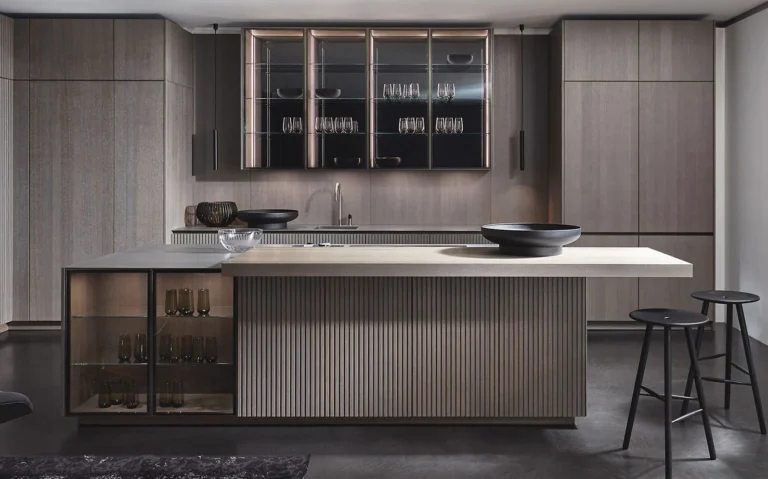
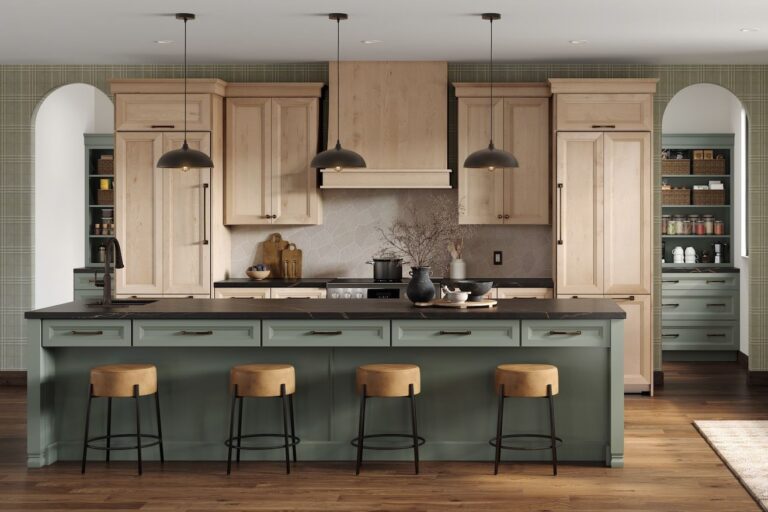
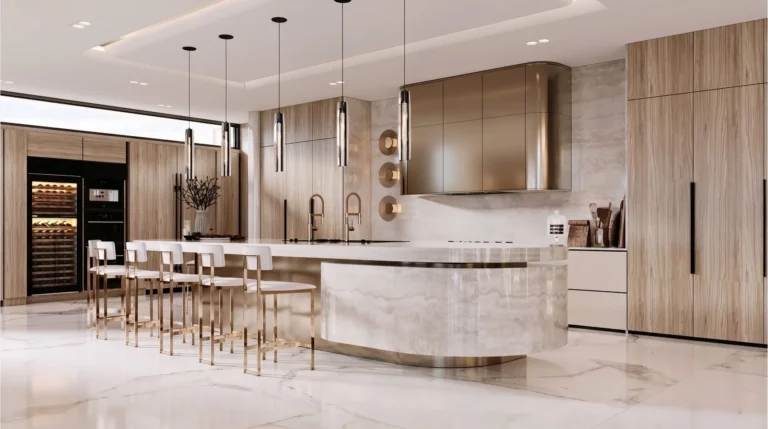
Architectural practices achieve visual balance by pairing light-reflective cabinet finishes, natural stone slabs, brushed non-ferrous metals, and continuous floor planes.
White oak, honed quartzite, unlacquered brass, and marine-grade stainless steel are specified to withstand harsh coastal exposures while maintaining subtle aesthetic warmth.
Symmetrical layout plans anchor central island stations, secondary prep sculleries, and concealed pantries within light-filled open-concept residences.
Successful spatial execution reconciles historical coastal building traditions with modern mechanical infrastructure, securing lasting residential value. Leading design practices evaluate solar angles, wind-driven moisture patterns, ceiling elevations, and material expansion coefficients before committing to spatial layouts. Thorough site analysis protects capital investments, delivers functional working environments, and guarantees enduring architectural performance.
Spatial Orientation and Coastal Sightlines
Integrating coastal kitchens into waterfront residences requires aligning cabinetry layouts with expansive window walls and outdoor terrace thresholds.
Maintaining tight reveal spacing across cabinetry runs preserves visual alignment without cluttering open views toward water horizons.
Ceiling Height Variations and Daylight Bouncing
Soaring vaulted ceilings require custom vertical joinery paired with indirect cove lighting to bounce natural ocean daylight deeper into interior spaces.
Integrating low-glare architectural downlights into smooth plaster planes highlights stone veining while preventing harsh glare on glass surfaces.
Understanding Coastal Kitchen Design Styles USA
Regional Microclimates and Environmental Exposures
Analyzing the spectrum of coastal kitchen design styles usa reveals that waterfront design requires deep material science and climatic understanding. Homeowners frequently assume coastal kitchen design simply involves painting cabinets soft blue or displaying nautical accessories.
In reality, top-tier architectural firms treat coastal kitchens as technical exercises in moisture management, glare mitigation, and salt-air resistance.
Lowering project failure risks requires analyzing timber kiln-drying metrics, stone porosity ratings, hardware metallurgy, and glass solar heat gain factors.
Specifying rift-sawn white oak millwork with clear matte polyurethane coats protects natural grain structures from UV-induced yellowing and moisture swelling.
Material Selection Under Saline Atmospheric Conditions
Coastal atmospheres carry airborne salt particles that corrode standard steel hardware, pit inferior chrome platings, and degrade soft lacquer finishes.
Specifying solid forged brass, 316-grade stainless steel, and natural stone protects cabinetry investments from rapid environmental degradation.
Selecting appropriate hardware alloys requires matching site proximity to saltwater bodies with local humidity cycles, HVAC filtration systems, and maintenance protocols.
Deep Contextual Background
Evolution of American Waterfront Living
Nineteenth-century American coastal kitchens functioned as utilitarian back-of-house service rooms, isolated from coastal weather and ocean views. Mid-twentieth-century beach cottages introduced casual open layouts, incorporating knotty pine paneling, simple laminate surfaces, and large picture windows.
Late twentieth-century luxury coastal residences expanded floor plans dramatically, transforming kitchens into expansive architectural anchors framed by panoramic glass walls.
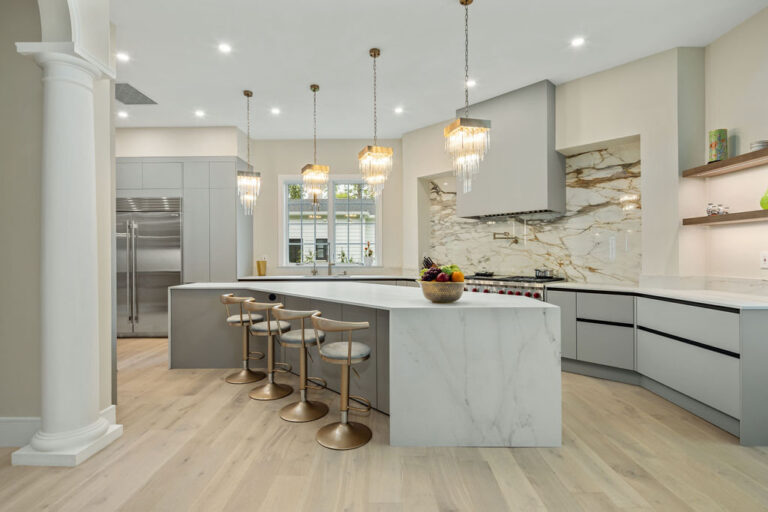
Modern high-end design replaces enclosed rooms with continuous open pavilions that showcase light oak cabinetry, honed quartzite, and panel-ready appliances.
Structural Adaptations in Coastal Architecture
Early coastal homes utilized small windows and deep covered porches to shield interior spaces from harsh ocean storms and intense glare.
Contemporary architectural engineering utilizes impact-resistant glass, automated solar shades, and marine-grade sealants to open kitchens directly to ocean vistas.
Conceptual Frameworks and Mental Models
The Reflective Index and Material Transparency Model
Evaluating coastal kitchen palettes involves balancing light-reflecting surfaces against light-absorbing matte textures along a calibrated visual continuum.
Combining soft-honed natural stone with matte light wood cabinetry and low-iron glass prevents harsh daylight glare while maintaining bright interior feel.
Dual-Circulation Coastal Workflow Zoning
Modern luxury coastal kitchens extend standard work triangles by separating primary food preparation stations from social beach-guest beverage zones.
Establishing dedicated secondary sculleries isolates soiled cookware and beach sand, preserving clean central island surfaces during afternoon gatherings.
Material Resilience Matrix for Saline Environments
Comparing counter and cabinet materials across environmental durability metrics helps specifiers select appropriate options for oceanfront properties.
| Material Class | Salt Air Immunity | UV Resistance | Moisture Stability | Relative Investment |
| Honed Taj Mahal Quartzite | Exceptional | Exceptional | Superior | Very High |
| Rift-Sawn White Oak | High | High (UV-Coated) | Moderate | High |
| Solid Forged Brass | Superior | Exceptional | Superior | High |
| Engineered Quartz | High | Low (UV Fading) | Exceptional | Moderate |
Key Categories and Regional Variations
Regional Architectural Expressions
Evaluating coastal kitchen design styles usa across regional shorelines requires understanding local building histories, sunlight angles, and vernacular materials.
| Regional Typology | Primary Palette | Key Material Focus | Architectural Character |
| New England Nautical | Navy, crisp white, warm oak | V-groove paneling, marble | Historic shingle-style elegance |
| Mid-Atlantic Shingle | Driftwood grey, soft cream | Quarter-sawn oak, soapstone | Understated cedar-shingle warmth |
| Florida Contemporary | Coral white, sand tone, brass | Quartzite, high-gloss lacquer | Light-filled tropical minimalism |
| Pacific Northwest Maritime | Charcoal, raw cedar, slate | Douglas fir, black steel, basalt | Rugged forest-meets-ocean depth |
New England Nautical Classic
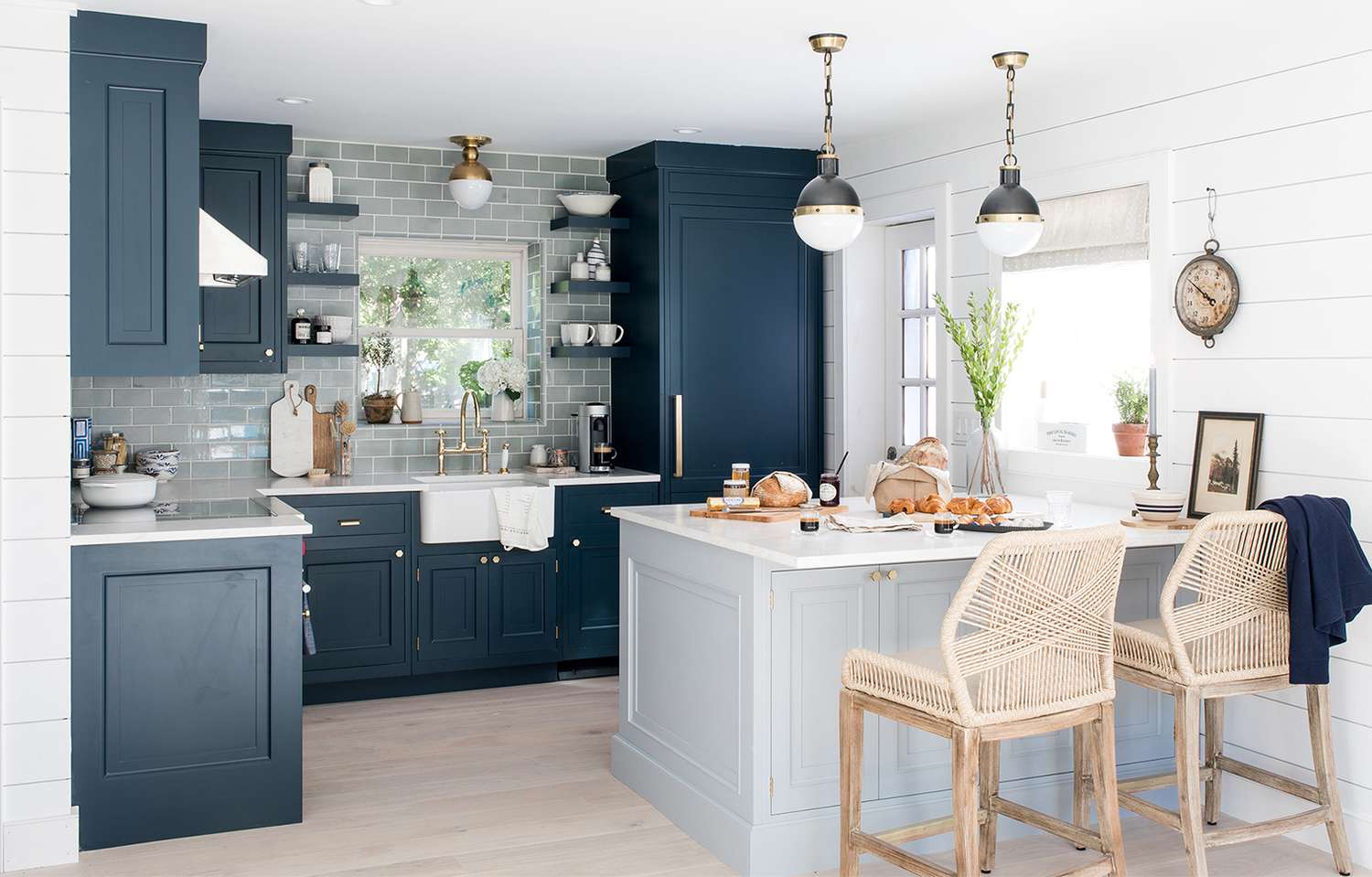
New England coastal kitchens draw inspiration from historic Cape Cod and Nantucket shingle homes, utilizing beaded V-groove paneling and inset cabinetry.
Designers specify polished nickel hardware, white marble worktops, and deep farmhouse sinks to honor traditional Atlantic maritime craftsmanship.
Mid-Atlantic Shingle Vernacular
Mid-Atlantic coastal designs incorporate muted driftwood tones, quarter-sawn oak cabinetry, honed soapstone counters, and warm hand-forged brass accents.
These spaces prioritize comfortable tactile textures, anchoring open kitchens with heavy butcher block preparation islands and classic woven seating.
Florida Coastal Contemporary
Florida waterfront kitchens maximize bright tropical sunlight through floor-to-ceiling glass walls, crisp white cabinetry, and light quartzite slabs.
Designers integrate motorized solar screens, brushed brass fittings, and hidden appliance runs to maintain clean minimalist lines across open living spaces.
Pacific Northwest Maritime Modern
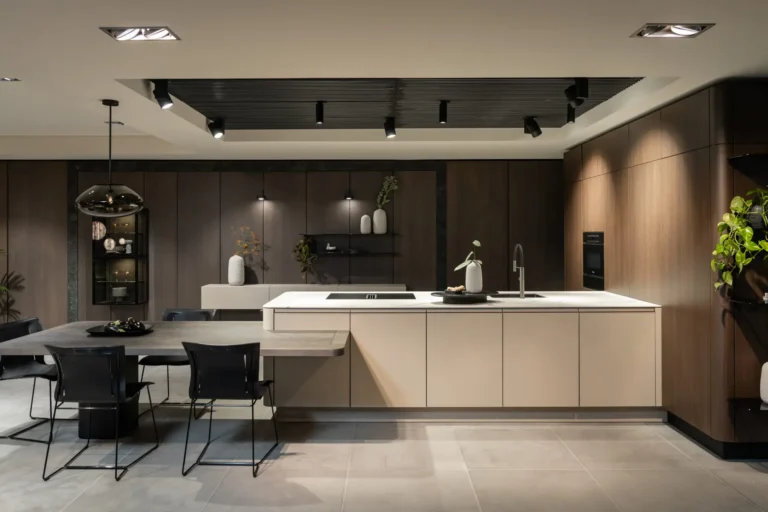
Pacific Northwest coastal kitchens reflect rugged coastlines through dark Douglas fir timber, natural slate flooring, basalt counters, and black steel accents.
These designs integrate large window walls to frame overcast coastal light, creating warm grounded spaces that celebrate regional timber traditions.
Realistic Selection Logic
Selecting a regional design style depends on local climate conditions, building envelope geometry, natural daylight levels, and surrounding landscape colors.
When designing along high-humidity Atlantic or Gulf coasts, specifying moisture-stable wood species and marine-grade finishes prevents warping and veneer delamination.
Detailed Real-World Scenarios Coastal Kitchen Design Styles USA
Cape Cod Historic Shingle Cottage Renovation
Restoring an early twentieth-century Cape Cod kitchen requires stabilizing original framing while introducing modern sub-zero refrigeration and open sightlines.
Designers specify narrow-frame white inset cabinetry, honed Calacatta quartzite counters, and wide-plank bleached oak floors to honor historic proportions.
South Florida Waterfront Modern New Build
Building an oceanfront contemporary home in Miami requires engineering floor-to-ceiling glass structures that handle hurricane-force winds and intense heat.
Architects incorporate slab-front white oak cabinetry, mitered Taj Mahal quartzite island waterfalls, and concealed pantry doors integrated into timber panel walls.
Pacific Northwest Sound-Front Restoration
Updating an overcast Puget Sound home demands introducing strategic reflective surfaces to capture subtle northern daylight without creating cold interiors.
The design team introduces light-finished fir cabinetry, honed white quartzite worktops, continuous perimeter cove lighting, and warm brass hardware accents.
Planning, Cost, and Resource Dynamics Coastal Kitchen Design Styles USA
Capital Distribution and Financial Allocation
Executing high-end coastal kitchens requires allocating capital across marine-grade hardware, specialized glass systems, custom millwork, and trade labor.
| Investment Category | Typical Budget Share | Primary Cost Factors |
| Custom Millwork & Cabinetry | 40% – 45% | Timber stability, UV finishes, inset joinery |
| Stone Slabs & Fabrication | 20% – 25% | Slab origin, mitered edge detailing, sealing |
| Appliance Suites & Ventilation | 15% – 20% | Panel-ready integration, marine-grade steel |
| Specialized Trade Labor | 15% – 20% | Moisture barriers, structural framing, HVAC |
Professional Services and Procurement Dynamics
Architectural design fees operate under percentage-of-construction costs, fixed project agreements, or hourly consultation structures across major coastal markets.
Establishing long-lead procurement schedules for imported natural stone slabs and custom window walls prevents construction phase delays.
Tools, Strategies, and Support Systems
Advanced Building Science and Digital Tools
Leading architectural firms utilize environmental modeling software and digital scanning tools to optimize light levels and material selections.
-
Solar Ray Tracing Software: Computer modeling tools that simulate seasonal sunlight angles and reflection glare off nearby water bodies.
-
3D Laser Room Scanners: Optical measurement hardware that maps irregular existing framing in historic coastal cottage renovations.
-
Building Information Modeling (BIM): Engineering software that coordinates complex HVAC dehumidification ducting within tight ceiling joists.
Marine-Grade Hardware and Protective Coatings
Combining 316-grade stainless steel drawer slides with solid forged brass handles ensures smooth mechanical operation along salt-air shorelines.
Applying advanced waterborne acrylic finish coats to custom wood cabinetry shields underlying timber fibers from humidity fluctuations and UV exposure.
Risk Landscape and Failure Modes
Decorative Oversaturation and Kitsch Risks
Combining too many literal marine accents—such as anchor motifs, rope trims, novelty signs, and shells—destroys architectural sophistication.
Selecting natural materials, refined timber grains, and subtle water-inspired color undertones maintains calm visual elegance across coastal interiors.
Accelerated Material Degradation Mechanisms
Failing to specify marine-grade metal alloys allows salt-air oxidation to pit chrome finishes and corrode standard cabinet hinges rapidly.
Verifying that all exposed metal hardware features solid brass, bronze, or 316-stainless steel construction prevents premature hardware replacement.
Governance, Maintenance, and Long-Term Adaptation
Structural Inspection and Environmental Audits
Verifying coastal kitchen construction quality requires inspecting window seal integrity, cabinet reveal alignments, and stone sealing treatments.
| Inspection Phase | Verification Target | Corrective Action Threshold |
| Cabinet Joinery | Reveal gap uniformity across runs | Max 1/16-inch margin variance |
| Stone Counter Joints | Flush seam transitions and polish quality | Seam gap must remain under 1/32-inch |
| Glazing Window Seals | Air infiltration and moisture barrier | Zero water leakage under pressure test |
Protective Coatings and Refinishing Schedules
Applying penetrating stone sealers annually preserves natural quartzite water-beading performance and protects underlying mineral structures from staining.
Cleaning custom hardwood cabinetry with mild pH-neutral soaps maintains protective finish coats without stripping natural oils or dulling sheen levels.
Measurement, Tracking, and Evaluation
Evaluating completed coastal kitchens involves checking cabinet alignment precision, stone seam smoothness, and window seal performance.
Quantitative Environmental Metrics
-
Relative Humidity Levels: Verifying indoor humidity remains between forty and fifty percent using automated HVAC sensors.
-
Cabinet Reveal Uniformity: Confirming door shadow gaps remain uniform within 1/16-inch margins across all millwork runs.
-
Counter Surface Level: Checking natural stone counters maintain true level across long island spans using digital levels.
Qualitative Design Indicators
-
Tactile Surface Smoothness: Touching honed stone, brushed wood grain, and warm brass provides refined sensory feedback.
-
Acoustic Softening: Solid timber joinery and heavy stone counters absorb ambient sound, creating quiet comfortable room acoustics.
Common Misconceptions and Oversimplifications Coastal Kitchen Design Styles USA
Myth 1: Coastal Style Requires Theme-Based Decor
Homeowners frequently assume achieving coastal kitchen design requires installing literal maritime props, sea creature motifs, and novelty signs.
In reality, authentic coastal architecture relies on natural light management, durable organic materials, and seamless connections to surrounding landscapes.
Myth 2: All White Finishes Are Suitable for Oceanfront Spaces
Renovators often believe painting cabinets bright white automatically creates a successful coastal kitchen environment regardless of light exposure.
However, harsh direct ocean sunlight off bright white paint creates intense visual glare, making warm off-whites and light timbers superior choices.
Ethical, Practical, and Contextual Considerations
Ecological Waterfront Stewardship and Sustainable Sourcing
Designing sustainable coastal kitchens involves specifying responsibly harvested domestic hardwoods, low-VOC finishes, and energy-efficient appliances.
Sourcing North American white oak or maple reduces international shipping emissions while supporting certified sustainable forestry practices.
| Sustainability Metric | Standard Specification | Eco-Friendly Alternative |
| Timber Sourcing | Uncertified Imported Hardwood | FSC-Certified North American White Oak |
| Cabinet Finish Coat | Solvent Conversion Varnish | Low-VOC Waterborne Acrylic Satin Finish |
| Stone Fabrication | Single-Use Municipal Water | Closed-Loop Water Recycling System |
Prioritizing sustainable materials ensures coastal kitchen design styles usa maintain environmental safety, structural integrity, and architectural beauty for generations.
Final Synthesis
Navigating coastal kitchen design styles usa demands balancing daylight management, material resilience, custom millwork joinery, and regional architectural traditions. Avoiding decorative over-thematization while embracing authentic natural materials yields timeless environments that adapt seamlessly to waterfront living.
When architects, interior designers, and master craftsmen prioritize precise spatial proportions, marine-grade materials, and sustainable sourcing, coastal kitchens deliver lasting beauty, functional excellence, and enduring home value.