How to Reduce Custom Cabinetry Expenses: Value Engineering and Cost Control
Architectural millwork costs accumulate across a complex network of material procurement, bench fabrication labor, finishing procedures, and job-site installation logistics. Custom cabinetry pricing reflects more than just raw timber, MDF panels, and drawer slides. How to Reduce Custom Cabinetry Expenses. It incorporates shop overhead, precise field verification, custom engineering calculations, and localized delivery logistics. Understanding these cost drivers requires analyzing how small design modifications alter manufacturing steps inside a modern cabinet shop.
Cabinet fabricators calculate estimates based on material yield, machine runtime, assembly complexity, and hand-finishing labor hours. Complex inset door profiles, solid hardwood box construction, and custom stain matching significantly increase shop bench time.
By contrast, streamlined full-overlay or frameless designs allow automated computer numerical control (CNC) routers to cut box parts with minimal labor intervention.
Achieving substantial budget reductions without sacrificing structural durability demands a systematic approach to value engineering. Homeowners and interior designers must look beyond surface aesthetics to optimize hidden structural components, box substrates, hardware mechanisms, and panel dimensions. Aligning millwork specifications with standard manufacturing efficiency reduces production costs while maintaining high visual quality.
Understanding How to Reduce Custom Cabinetry Expenses
Technical Scope and Value Engineering Realities
Learning how to reduce custom cabinetry expenses requires analyzing the cost breakdown between materials, shop labor, and job-site installation. Custom cabinet projects are often priced using linear foot estimates or detailed bill-of-materials calculations. When budgets exceed initial expectations, buyers mistakenly assume that lowering raw timber grades provides the largest savings. In reality, bench labor, finishing steps, and complex door joinery represent a significantly larger portion of overall fabrication invoices.
Lowering expenses effectively depends on strategic specification choices rather than compromising fundamental structural integrity. Replacing interior solid wood box sides with premium furniture-grade plywood or high-density melamine maintains structural capacity while cutting raw material and finishing costs.
Similarly, specifying flat slab doors or simple Shaker profiles instead of intricate applied-molded five-piece doors reduces machine runtime and hand-sanding labor hours.
Mastering how to reduce custom cabinetry expenses requires evaluating the long-term trade-offs of every engineering decision. Sacrificing essential structural hardware, such as under-mount soft-close drawer slides, yields minor immediate savings while degrading daily functional operation over time.
Strategic cost management focuses on eliminating non-essential decorative labor, optimizing sheet goods yield, and standardizing box sizes to maximize shop throughput without sacrificing long-term durability.
Structural Differences Between Inset and Full-Overlay Construction
Cabinet buyers evaluate major structural and pricing trade-offs when choosing between traditional inset face-frame cabinets and modern full-overlay frameless construction. Inset doors sit perfectly flush inside face-frame openings, requiring precise hand-fitting, micro-tolerances, and custom edge finishing that increase shop assembly time.
Full-overlay frameless cabinetry mounts door hinges directly to interior box walls, hiding box edges while maximizing internal storage depth and speeding up assembly.
Evolution of Residential Cabinet Fabrication Systems
From Bench-Built Joinery to Automated CNC Manufacturing
Nineteenth-century cabinetmakers built storage furniture by hand using solid timber planks, hand planes, and traditional mortise-and-tenon joinery. Early casework required extensive manual fitting, on-site adjustments, and labor-intensive multi-step hand-rubbed oil finishes. Production volume remained low, making high-quality fitted kitchen cabinetry an exclusive luxury feature in grand estates.
The mid-twentieth century introduced standardized modular kitchen units, industrial particleboard substrates, and decorative plastic laminates. European post-war reconstruction led to the development of the System 32 frameless cabinet standard, utilizing pre-drilled 32-millimeter hole patterns to streamline hardware mounting and shelf adjustment.
Modern architectural millwork relies on automated CNC nested-base routers, automated edge-banders, and computer-guided spray booths. Digital shop drawings feed cutting patterns directly to machinery, minimizing material waste and reducing manual shop labor.
Advancements in Substrates and Synthetic Wood Composites
Traditional solid wood cabinetry suffered from natural expansion and contraction caused by seasonal interior humidity fluctuations. Modern engineered composite panels, including medium-density fiberboard (MDF) and multi-ply hardwood plywood, deliver superior dimensional stability across changing environments.
High-density furniture-grade MDF provides an exceptionally smooth, uniform surface for painted finishes, eliminating natural grain telegraphing while significantly reducing raw material costs compared to clear solid hardwoods.
Value Engineering Frameworks for Custom Millwork
The 80/20 Rule in Cabinet Specification
The Pareto Principle applies directly to custom cabinet manufacturing, where twenty percent of design features drive eighty percent of custom shop labor costs.
Identifying high-cost decorative options allows designers to eliminate manual labor steps while preserving overall kitchen aesthetics.
The Substrate and Finish Tier Model
Categorizing materials by performance and expense helps specifiers optimize cabinet budgets without sacrificing structural stability.
Specifying high-density fiberboard for painted door panels and pre-finished maple plywood for internal boxes achieves an ideal balance of visual quality and cost control.
Material Performance Matrix
Comparing panel substrates across physical and economic metrics helps builders select optimal materials for specific cabinet applications.
| Substrate Material | Screw-Holding Capacity | Moisture Resistance | Paint Surface Smoothness | Relative Cost |
| Clear Solid Hardwood | Exceptional | Low (Warping Risk) | Moderate (Grain Texture) | Very High |
| Pre-Finished Hardwood Plywood | Superior | High | Moderate | High |
| High-Density Fiberboard (MDF) | Moderate | Moderate | Exceptional (Flawless) | Low |
| Industrial Particleboard | Low | Very Low | High | Very Low |
Primary Material Typologies and Construction Specifications
Selecting appropriate cabinet materials requires analyzing trade-offs across durability, finish quality, and shop assembly labor.
| Construction Method | Primary Advantage | Labor Intensity | Best Budget Application |
| Modern Frameless (Euro-Style) | Maximum interior space and fast CNC cutting | Low | Cost-Effective Modern Kitchens |
| Traditional Face-Frame Overlay | Strong front rigidity and classic appearance | Moderate | Traditional & Transitional Layouts |
| Precision Flush Inset | Premium architectural appearance | Very High | High-End Luxury Residences |
| Hybrid Modular Custom | Custom face fronts on standard box modules | Low | Value-Engineered Renovations |
Modern Frameless Construction
Frameless cabinets eliminate the front hardwood frame, attaching door hinges directly to structural side panels.
This construction style maximizes interior drawer width, speeds up CNC machining, and reduces raw hardwood material requirements.
Standardized Full-Overlay Face-Frame Cabinetry
Full-overlay face-frame designs feature a solid wood perimeter frame on the front box edge, covered almost entirely by the doors.
This traditional style offers high front box rigidity while hiding small alignment variations behind overlay door fronts.
Hybrid Modular Custom Integration
Hybrid construction combines factory-produced standard carcass boxes with custom-built door fronts and end panels.
This approach provides a fully custom exterior appearance while leveraging high-volume manufacturing pricing for interior cabinet boxes.
Detailed Real-World Fabrication Scenarios How to Reduce Custom Cabinetry Expenses
Painted Transition Kitchen Value Engineering
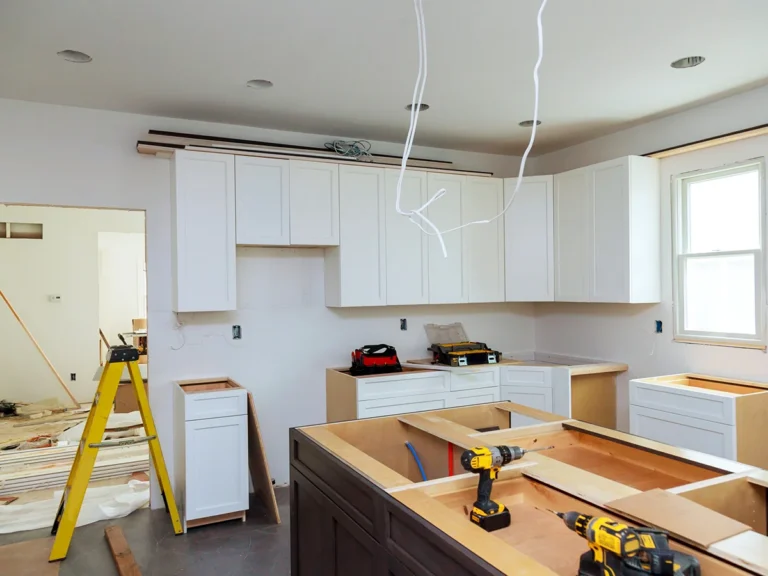
A homeowner wants a luxury custom painted kitchen with detailed inset doors, but the initial bid exceeds the budget by thirty percent.
The specifier switches the design from flush inset to full-overlay frameless, changes painted solid birch doors to painted MDF centers, and uses pre-finished plywood boxes.
Custom Executive Library Wall Unit Optimization
A custom home office design calls for a solid walnut library wall featuring intricate carved crown moldings and integrated lighting channels.
The architect preserves the solid walnut face-frames and doors but specifies walnut-veneered core panels for the high-volume interior shelving bays.
High-Moisture Waterfront Condo Kitchen Remodel
Renovating a coastal apartment requires durable cabinetry that withstands ambient humidity without warping or swelling over time.
The builder specifies marine-grade core plywood for all cabinet boxes paired with sealed painted MDF door panels to block moisture absorption.
Economic Dynamics and Financial Resource Planning
Cost Breakdown for Custom Cabinet Manufacturing
Budgeting for custom architectural millwork requires accounting for raw materials, shop labor, finishing steps, and job-site installation.
| Expense Category | Typical Budget Share | Primary Cost Drivers |
| Bench Fabrication Labor | 35% – 45% | Joinery complexity, inset fitting, hand-sanding |
| Raw Materials & Sheet Goods | 25% – 35% | Timber species, plywood core grade, MDF usage |
| Finishing & Spraying Operations | 15% – 20% | Multi-step stains, custom color matching, glazes |
| Job-Site Fitting & Installation | 10% – 15% | Scribe fitting, wall leveling, crown molding |
Indirect Expenses and Site Fitting Logistics
Installation expenses rise significantly when cabinet installers must scribe box edges to crooked, out-of-plumb job-site walls.
Ordering oversized scribe fillers rather than integrated extended box sides allows faster field fitting, saving expensive job-site labor hours.
Specification Tools and Hardware Optimization Systems
Computer-Aided Manufacturing and Nested Yield Optimization
Modern cabinet shops use specialized nesting software to arrange cabinet parts efficiently across raw sheet goods.
Maximizing sheet yield reduces material waste, allowing shop managers to pass material cost savings directly to customers.
Essential Hardware Optimization Items
-
Soft-Close Concealed Hinges: Standard six-way adjustable cup hinges provide fast door alignment without requiring custom fitting.
-
Full-Extension Under-Mount Slides: High-capacity concealed slides ensure smooth drawer operation while maximizing usable box depth.
-
Modular Corner Pull-Out Trays: Modern metal pull-out organizers replace complex built-in wood lazy Susans, lowering millwork labor costs.
Risk Landscape and Quality Failure Modes
Material Degradation and Finishing Telegraphing
Using cheap particleboard in wet sink enclosures leads to substrate swelling, veneer delamination, and structural cabinet failure.
Specifying water-resistant exterior-grade plywood for sink base units prevents catastrophic structural damage from plumbing leaks.
Paint Cracking along Solid Wood Joint Seams
Solid wood five-piece door frames expand and contract naturally, causing paint films to crack along frame joinery seams over time.
Using single-piece routed MDF door panels for painted finishes eliminates joint movement, preventing unsightly finish cracking.
Governance, Maintenance, and Asset Preservation
Quality Control and Shop Inspection Standards
Verifying custom millwork quality requires structured inspections at the cabinet shop before shipping components to the job site.
| Inspection Phase | Verification Target | Corrective Threshold |
| Raw Box Assembly | Squareness across box diagonals | Max 1/16-inch variance across corner points |
| Sanding & Prep | Surface smoothness and defect inspection | Zero cross-grain scratches under directional light |
| Finish Application | Film thickness and color uniformity | Consistent sheen without runs or dry spray |
| Hardware Testing | Smooth slide travel and door soft-close | Self-closing action must engage smoothly |
Scheduled Maintenance for Long-Term Preservation
Proper care preserves custom cabinet finishes and keeps mechanical drawer slides operating smoothly for years.
Wiping cabinet surfaces with soft microfiber cloths and adjusting hinge screws periodically prevents door sagging and finish wear.
Evaluation Metrics and Quality Control
Evaluating custom cabinetry performance requires measuring door gaps, drawer slide smooth operation, and finish durability.
Quantitative Performance Metrics
-
Uniform Door Reveal Gap: Maintaining consistent 1/8-inch reveals between frameless doors across all cabinet runs.
-
Drawer Load Capacity Rating: Verifying drawer slides hold a minimum dynamic rating of 75 to 100 pounds under full extension.
-
Finish Adhesion Resistance: Confirming spray coatings pass cross-hatch adhesion tests on sample finish blocks.
Qualitative Design Signals
-
Tactile Door Closing Action: Doors should close silently without bouncing or binding against adjacent face frames.
-
Seamless Scribe Lines: Wall filler strips should fit flush against irregular plaster or drywall without visible gaps.
Common Millwork Misconceptions How to Reduce Custom Cabinetry Expenses
Myth 1: Solid Wood Boxes Are Always Superior to Plywood
Cabinet buyers often assume solid hardwood boards make the best internal cabinet boxes.
However, solid wood planks warp and split over time, making multi-ply engineered plywood a far more stable and durable box substrate.
Myth 2: Custom Cabinetry Is Always Expensive Compared to Semi-Custom
Homeowners often believe ordering custom cabinets automatically costs twice as much as semi-custom modular units.
In reality, value-engineered custom millwork optimized for CNC production often matches semi-custom pricing while providing superior spatial fitting.
Environmental Sustainability and Material Ethics
Modern millwork production prioritizes sustainable timber harvesting, low-VOC finishes, and formaldehyde-free composite panel cores.
Specifying FSC-certified plywood and waterborne acrylic coatings protects indoor air quality while supporting responsible forest management.
| Sustainability Metric | Standard Specification | Eco-Friendly Alternative |
| Panel Core Adhesive | Urea-Formaldehyde Resin | Soy-Based / Phenolic No-Added-Formaldehyde |
| Timber Sourcing | Uncertified Domestic Hardwoods | FSC-Certified Sustainable Forest Lumber |
| Topcoat Finish | Solvent-Based Conversion Varnish | Waterborne UV-Cured Low-VOC Acrylic |
Selecting sustainable, eco-friendly materials ensures custom cabinetry remains safe, durable, and environmentally responsible.
Final Synthesis
Successfully reducing custom cabinetry expenses requires balancing smart material choices, simplified door profiles, and efficient box construction. Understanding how shop labor, machine runtime, and substrate selection drive overall costs empowers buyers to make informed value-engineering decisions.
When architects, designers, and homeowners focus on optimizing structural details rather than sacrificing hardware quality, custom cabinetry delivers exceptional beauty, durability, and value.