Best Eco Friendly Countertop Options: Sustainable Material Engineering
Evaluating sustainable surface materials requires analyzing resource extraction, industrial processing, indoor air chemistry, and long-term end-of-life disposal. Residential surface specifying historically prioritized initial purchase cost and basic visual appeal. Modern architectural specification treats kitchen work surfaces as integrated material systems. Best Eco Friendly Countertop Options. Choosing a sustainable kitchen surface demands analyzing embodied carbon, water consumption during manufacturing, volatile organic compound emissions, and regional supply chain logistics. Improper material selection introduces hidden toxic off-gassing, accelerates quarry depletion, and generates non-recyclable solid waste when surfaces are replaced prematurely.
Architects and interior specifiers navigate complex engineering trade-offs when selecting low-impact surface materials. Substrate porosity, thermal shock resistance, stain vulnerability, and structural flexural strength govern real-world performance across daily cooking environments. When work surfaces degrade under mild thermal stress or routine household cleaning agents, homeowners replace them early. This premature replacement completely negates any theoretical ecological benefits calculated during the initial specification phase. Balancing material durability with environmental stewardship requires evaluating physical substrate physics alongside life-cycle assessment metrics.
Synthesizing material science with ecological evaluation demands moving beyond generic greenmarketing claims. Material performance depends on binder chemistries, recycled content percentages, regional sourcing radii, and maintenance sealers. As sustainable building certifications become standard across high-end residential development, specifiers require structured analytical methodologies. A systematic approach prevents greenwashing errors, ensures healthy indoor air quality, and delivers durable architectural installations that perform reliably over multi-decade lifespans.
Understanding Best Eco Friendly Countertop Options
Evaluating the best eco friendly countertop options requires distinguishing genuine circular material engineering from superficial environmental marketing. Misconceptions frequently occur when consumers evaluate material sustainability using single criteria, such as recycled content percentages. A surface slab composed of eighty percent recycled glass bound together by toxic petroleum-based polyester resin can off-gas indoor air pollutants while remaining impossible to recycle at the end of its useful lifespan. Genuine environmental performance requires analyzing the complete material lifecycle from raw extraction to ultimate post-demolition disposal.
Material processing intensity serves as a foundational metric during surface evaluation. Quarrying natural stone requires heavy diesel machinery, diamond-wire cutting equipment, and international freight transportation across continents. Conversely, manufacturing engineered quartz slabs involves energy-intensive resin curing ovens and intense vacuum compaction processes. Analyzing the best eco friendly countertop options requires balancing raw material depletion against energy consumption, binder toxicity, and regional transport distances to determine true environmental impact.
Material Extraction Footprint
Raw material extraction methods dictate initial ecological disruption. Sustainable sourcing prioritizes post-industrial waste streams, rapidly renewable plant fibers, and locally quarried stone over imported minerals that require invasive open-pit mining operations.
Binder Toxicity Analysis
Synthetic resins hold composite particles together within engineered slabs. Low-impact surfaces utilize bio-based polyols or natural cementitious matrices, eliminating toxic formaldehyde emissions and volatile organic compound off-gassing within residential indoor spaces.
Deep Contextual Background
The evolution of kitchen countertop surface materials tracks broader developments in chemical synthesis, industrial mining, and environmental awareness over the past century. Early twentieth-century kitchens relied on locally sourced hardwood butcher blocks, zinc sheets, cast iron, and natural slate quarried within regional transport zones. These early surfaces offered low embodied energy, though they required regular maintenance, oiling, and periodic surface refinishing to manage moisture absorption.
Mid-century industrial manufacturing introduced synthetic laminates, combining phenolic resins with decorative paper layers. Synthetic laminates lowered residential building costs significantly and accelerated mass housing construction. However, these petroleum-derived surfaces relied heavily on urea-formaldehyde adhesives, offered limited heat resistance, and ended up in municipal landfills when damaged. The late twentieth century saw the dominant rise of imported granite and engineered quartz, driven by consumer demand for non-porous, maintenance-free surfaces with high stain resistance.
The widespread adoption of global natural stone trading generated substantial environmental costs. Mass granite quarrying altered regional ecosystems, while international maritime shipping increased carbon emissions across supply chains. Concurrently, engineered quartz manufacturing raised health concerns regarding industrial crystalline silica exposure among fabrication workers. Modern surface engineering responds directly to these systemic challenges by developing bio-based composite binders, utilizing ultra-compact sintered porcelain, and recycling post-consumer glass into structural architectural slabs.
Conceptual Frameworks and Mental Models
Architects and material scientists utilize structured analytical models to evaluate surface sustainability, ensuring environmental goals align with structural performance and human health targets.
The Life Cycle Assessment Framework
This comprehensive model evaluates environmental impact across five distinct life stages: raw material extraction, factory processing, regional transport, operational maintenance, and final disposal or recycling. Specifiers use this framework to ensure that low extraction impacts are not offset by energy-intensive transport or toxic maintenance protocols.
The Embodied Carbon Matrix
The carbon matrix quantifies total greenhouse gas emissions generated during material extraction, manufacturing, and transportation to the project site. Comparing materials through embodied carbon metrics reveals that locally quarried stone often beats imported synthetic composites despite similar initial processing footprints.
The Indoor Environmental Quality Model
This health-focused framework evaluates material off-gassing behavior, chemical sealer toxicity, and surface cleanability. The model prioritizes inert, non-porous surfaces that require zero toxic chemical sealers, protecting indoor air quality while eliminating chemical exposure for building occupants.
Key Categories and Technical Variations Best Eco Friendly Countertop Options
Evaluating sustainable surface options requires analyzing structural composition, binder chemistry, performance limitations, and lifecycle trade-offs across primary material classifications.
Recessed Post-Consumer Glass Composites
Manufactured by embedding crushed recycled bottle glass and windows into a cementitious or resin matrix, glass composites divert massive waste volumes from municipal landfills. Cement-bound glass slabs offer complete recyclability and zero off-gassing, though they require periodic sealing to prevent staining across porous mortar matrix lines.
Sintered Compact Stone Slabs
Formed by subjecting natural clay, feldspar, and silica minerals to extreme heat and pressure, sintered stone mimics natural metamorphic rock formation. These surfaces contain zero synthetic petroleum resins, resist extreme thermal shock, and withstand heavy scratch forces without off-gassing.
FSC-Certified Paper Composite Surfaces
Constructed from post-consumer recycled paper sheets saturated with petroleum-free phenolic resins and cured under intense heat, paper composites deliver dense, warm work surfaces. They resist impact and cracking exceptional well, though they require periodic food-grade wax treatments to maintain moisture barriers.
Salvaged and Reclaimed Hardwood
Reclaimed timber salvages old-growth lumber from deconstructed industrial barns, wine vats, and commercial structures. Old-growth wood offers tight grain density and distinct visual character, though it demands disciplined sealing routines to prevent water damage around plumbing sinks.
Bio-Based Engineered Terrazzo
Combining recycled marble chips and natural aggregates within a bio-based epoxy or hydraulic cement binder, modern terrazzo offers custom design flexibility. Cementitious terrazzo provides superior fire resistance and zero off-gassing, though structural weight requires reinforced cabinet framing.
Locally Sourced Natural Soapstone
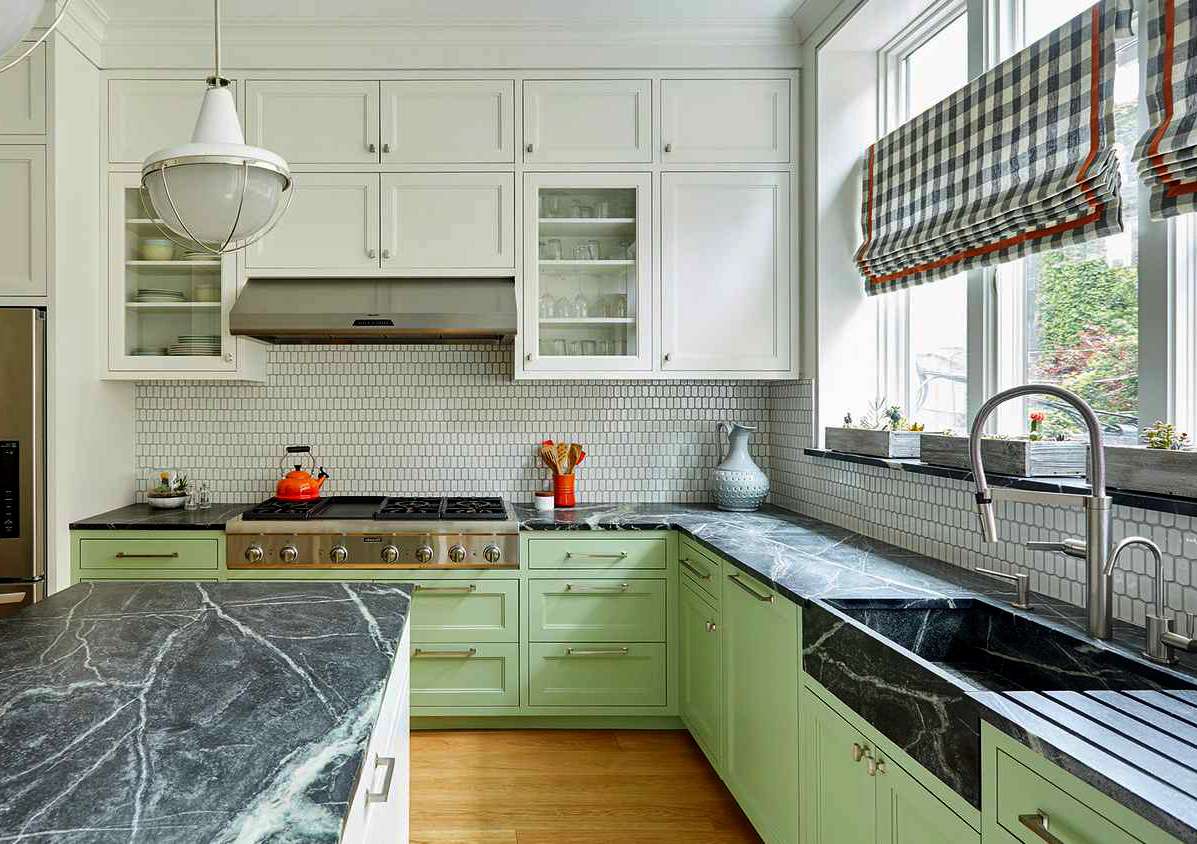
Soapstone is a dense, non-porous metamorphic rock composed primarily of talc, quarried across regional North American deposits. Naturally impervious to liquids and acids, soapstone requires zero synthetic chemical sealers, making it an extraordinarily durable material with low transport emissions.
| Material Category | Primary Substrate | Binder Chemistry | Thermal Resistance | Relative Lifecycle Cost |
| Recycled Glass | Post-Consumer Glass | Cement / Resin Matrix | Moderate to High | Moderate to High |
| Sintered Stone | Natural Clay / Minerals | Sintered (No Binder) | Superior | High to Extreme |
| Paper Composite | Recycled Paper Fiber | Phenolic Bio-Resin | High | Moderate |
| Reclaimed Wood | Salvaged Timber | Natural Oils / Waxes | Low to Moderate | Moderate to High |
| Bio-Terrazzo | Recycled Aggregate | Bio-Epoxy / Cement | High | High |
| Local Soapstone | Quarried Metamorphic | Inert Natural Mineral | Superior | High |
Material Selection Decision Logic
Selecting the proper surface material involves evaluating cooking habits, indoor health priorities, and local supply availability:
Thermal Stress Assessment
If heavy hot cookware is transferred directly from baking ovens onto work surfaces, select sintered compact stone or natural soapstone. Avoid paper composites or resin-bound glass slabs that can scorch or experience thermal shock cracking under high temperatures.
Indoor Air Sensitivity Mapping
If project goals demand strict zero-VOC certifications for chemically sensitive occupants, specify cement-bound recycled glass, natural soapstone, or sintered stone. Avoid synthetic resin binders that off-gas volatile organic compounds during initial installation phases.
Regional Supply Radius Checking
If regional transport emissions must remain below defined environmental limits, source domestic soapstone or locally salvaged hardwood. Avoid imported European sintered stone or Asian engineered composites that accrue massive maritime shipping miles.
Detailed Real-World Scenarios Best Eco Friendly Countertop Options
Scenario 1: The Zero-VOC Urban Residence
An urban residential project targets strict Greenguard Gold indoor air quality certification while accommodating an active family kitchen. Constraints include zero chemical off-gassing, high stain resistance from child spills, and zero toxic stone sealers. Specifiers selected a dark, locally quarried soapstone surface. Soapstone’s completely non-porous mineral structure resists juice stains without requiring synthetic fluoropolymer sealers, protecting indoor air purity while utilizing regional regional quarrying.
Scenario 2: The High-Traffic Commercial Test Kitchen
A commercial culinary research space requires work surfaces capable of handling intense thermal shock, heavy heavy cast-iron cookware, and aggressive daily sanitization. The material must resist scorching, scratching, and chemical degradation from acidic food ingredients. Designers specified a twelve-millimeter full-body sintered compact stone surface. The unglazed ceramic matrix withstands direct blowtorch heat and acidic citrus juices effortlessly while containing zero synthetic resin binders.
Planning, Cost, and Resource Dynamics
Specifying sustainable surface materials requires balancing initial material purchasing fees against specialized fabrication labor, transport logistics, and maintenance costs. While basic synthetic laminates offer low initial purchase prices, their short operational lifespans generate high long-term replacement expenses.
Fabrication complexity heavily influences final installation budgets. Hard materials like sintered stone demand specialized diamond tooling, water-jet cutting machinery, and careful handling to prevent edge chipping during installation.
| Surface Tier | Cost Per Square Foot | Material Sourcing Profile | Expected Lifespan |
| Entry Sustainable | $45 – $75 | Paper composites, local salvaged softwoods | 15 – 25 Years |
| Mid-Tier Eco Composite | $80 – $130 | Recycled glass, bio-terrazzo, domestic slate | 30 – 50 Years |
| High-End Architectural | $140 – $250+ | Sintered compact stone, local soapstone | 50+ Years (Lifetime) |
Tools, Strategies, and Support Systems Best Eco Friendly Countertop Options
Selecting and installing low-impact surfaces relies on standardized environmental certifications, precision digital fabrication, and non-toxic maintenance systems.
Environmental Product Declarations
Third-party verified EPD documents quantify embodied carbon, water usage, and raw material toxicity metrics, allowing specifiers to compare materials accurately.
Water-Jet Digital Fabrication
Automated cold-water jet cutting machinery cuts complex sink cutouts and edge profiles precisely, preventing thermal cracking while recycling fabrication process water.
Food-Grade Natural Wax Finishes
Solvent-free walnut oils and beeswax blends protect paper composites and butcher blocks without introducing toxic petroleum distillates into food preparation zones.
Greenguard Gold Air Certifications
Rigorous testing certifications verify that finished surface slabs meet strict low-emission limits for volatile organic compounds and formaldehyde inside living spaces.
Zero-VOC Mineral Sealers
Breathable silicate sealers protect cementitious terrazzo and glass composites against moisture staining without releasing synthetic solvent fumes.
Risk Landscape and Failure Modes
Sustainable countertop installations can encounter material degradation, structural cracking, or maintenance failures if engineering parameters are neglected.
Resin Scorch Discoloration
Occurs when hot baking dishes are placed directly onto resin-bound glass or paper composite surfaces. Excessive heat breaks down synthetic binder molecules, leaving permanent yellow scorch rings.
Cementitious Stain Etching
Happens when acidic food liquids, such as lemon juice or wine, react with unsealed cement matrices in recycled glass slabs, dulling polished surface finishes.
Edge Chipping Impact Fractures
Occurs when heavy pots strike brittle, un-beveled edges of sintered stone or glass composite slabs, causing localized material fracturing along perimeter margins.
Governance, Maintenance, and Long-Term Adaptation
Preserving sustainable surface performance requires establishing routine cleaning procedures, applying non-toxic protective barriers, and scheduling periodic refinishing.
Surface Sealer Maintenance
Apply zero-VOC silicate or food-grade oil treatments semi-annually on porous surfaces to preserve hydrophobic moisture barriers across high-use sink zones.
Mechanical Scratch Sanding
Paper composites and solid wood butcher blocks can be sanded smooth using fine-grit abrasives to erase surface knife scratches, renewing the original work finish.
Edge Profile Radiusing
Ensure fabricators grind a minimum three-millimeter radius along all exposed slab edges during installation, distributing impact forces to prevent corner chipping.
Measurement, Tracking, and Evaluation Best Eco Friendly Countertop Options
Evaluating surface sustainability requires comparing quantitative lifecycle environmental data against qualitative physical performance metrics.
Embodied Carbon Tracking
Quantify total carbon emissions generated per square foot of installed surface material, ensuring choices meet project embodied carbon caps.
Indoor Air Off-Gassing Audits
Measure total volatile organic compound concentrations in ambient kitchen air post-installation using photoionization detectors to verify zero off-gassing targets.
Surface Stain Resistance Ratings
Subject material test samples to high-pigment food substances—including coffee, turmeric, and acidic juices—for twenty-four hours to measure stain cleanability.
Common Misconceptions and Oversimplifications
Correcting common industry myths helps specifiers and property owners make informed material choices.
All Natural Stone Is Eco-Friendly
Quarrying natural stone involves heavy energy consumption, habitat disruption, and international maritime shipping. Locally recycled composites often deliver superior overall environmental footprints.
Recycled Content Guarantees Sustainability
High recycled content percentages mean little if materials are bound together with toxic petroleum resins that off-gas chemicals and prevent post-use recycling.
Sustainable Materials Are Structurally Weak
Modern sintered stone and engineered paper composites offer flexural strength, scratch resistance, and impact durability matching or exceeding traditional granite.
Ethical, Practical, and Contextual Considerations
Specifying sustainable surface materials involves considering worker safety across global supply chains. Selecting engineered quartz alternatives protects fabrication workers from silicosis risks associated with cutting high-silica dust.
Supporting regional quarries, utilizing post-consumer domestic waste streams, and selecting non-toxic materials fosters healthy built environments while driving circular economic practices across the construction industry.
Conclusion
Determining the best eco friendly countertop options requires evaluating raw material extraction, chemical binder toxicity, regional transport logistics, and long-term surface durability. Success depends on selecting inert, non-porous materials that resist thermal stress and chemical staining without off-gassing indoor air pollutants or requiring toxic sealers. By prioritizing lifecycle material performance, low embodied carbon, and circular design principles over temporary aesthetic trends, architects, interior specifiers, and homeowners create healthy, beautiful culinary spaces that endure for generations.