Best Pantry Storage Options: Systemic Engineering and Spatial Design
Designing efficient domestic food storage requires evaluating structural load limits, atmospheric ventilation, material durability, and inventory access mechanics. Pantry zones are frequently treated as simple closet spaces filled with basic flat shelving. However, high-density food storage subjects wall anchors, bracket assemblies, and shelf planes to continuous static weight loads. Best Pantry Storage Options. Heavy canned goods, bulk grains, liquid containers, and small appliances exert significant physical forces on wall framing.
Long-term storage success depends on matching physical hardware specs with daily food consumption patterns. Proper spatial layouts prevent inventory loss, food spoilage, pest infestation, and structural shelf sagging over time. When storage assemblies are poorly engineered, deep items become hidden, expired goods accumulate in dark corners, and shelf brackets loosen under load.
A rigorous pantry design balances spatial capacity with immediate visual clarity and physical reachability. Professional space planners evaluate vertical clearance ratios, shelf depth limits, lighting penetration angles, and environmental humidity controls before installing cabinetry. When storage hardware aligns with family inventory needs, homeowners achieve seamless kitchen workflow and minimal food waste.
Understanding Best Pantry Storage Options
Technical Scope and Structural Performance Metrics
The phrase best pantry storage options refers to spatial hardware assemblies, modular cabinetry, and container systems engineered to optimize food organization and structural load capacity. Industry standards measure pantry performance through specific structural criteria, including shelf deflection limits under uniform loads, hardware corrosion resistance, and material cleanability. Selecting appropriate storage configurations requires matching these physical material metrics against expected household consumption volume.
Homeowners often assume a single storage design works well across all food categories. In practice, fixed deep wooden shelves offer high static weight capacity but create dark visual dead zones where small items get lost. Pull-out wire baskets provide excellent ventilation for dry goods, yet small jars can tip over on open wire grids without solid liners.
Evaluating best pantry storage options demands a comprehensive analysis of material vulnerabilities, hardware installation quality, and user access patterns. Storage designers evaluate the entire assembly, including wall stud mounting anchors, bracket support spacing, vertical drawer slide ratings, and corner accessibility hardware. This systematic approach prevents structural shelf sagging and maximizes usable cubic storage capacity.
Structural Trade-offs Between Depth, Visibility, and Access
Space planners analyze fundamental trade-offs when choosing between deep high-capacity shelves and shallow high-visibility storage racks. Deep shelves maximize total physical volume, yet they reduce visual awareness of items stored near the back wall.
Shallow door-mounted racks or pull-out vertical drawers limit individual shelf volume, but they provide immediate visual awareness and effortless access to every stored item.
Historical Evolution of Domestic Food Storage
From Root Cellars and Larders to Built-In Cabinetry
Early architectural food storage relied on subterranean root cellars and ventilated larders to preserve perishable grains, salted meats, and root vegetables. Cold masonry walls and passive air vents regulated internal temperatures naturally, protecting food supplies from summer heat.
The mid-twentieth century introduced widespread home refrigeration and processed packaged foods, shifting storage needs toward dry pantry cupboards. Builders incorporated fixed wood shelving units inside hallway closets or kitchen cabinet frames.
Modern residential design treats the pantry as an engineered storage hub featuring adjustable aluminum tracks, soft-close heavy-duty drawers, and integrated LED task lighting.
Advancements in Material Chemistry and Hardware Engineering
Early wire shelving relied on thin vinyl coatings that cracked, discolored, and peeled under humid kitchen conditions.
Modern systems feature powder-coated steel alloys, anodized aluminum frames, tempered glass drawer fronts, and food-grade BPA-free polymer containers that resist impact and scratching.
Conceptual Frameworks for Spatial Management
The First-In, First-Out (FIFO) Inventory Model
Commercial food service operations utilize strict FIFO rotation frameworks to ensure older inventory is consumed before newly purchased items.
Designing gravity-fed can racks or shallow step-shelving supports seamless FIFO rotation, preventing expired canned goods from accumulating in hidden corners.
The Ergonomic Reach and Frequency Zone Model
Human reach limits determine optimal placement for heavy goods, frequently used ingredients, and seasonal items.
Heavy bulk items belong below waist height to prevent lifting strain, whereas daily cooking staples sit within primary eye-level zones.
Storage System Performance Comparison Matrix
Comparing storage hardware types across structural and practical metrics helps planners choose appropriate solutions for specific pantry layouts.
Key Storage Categories and Systemic Variations Best Pantry Storage Options
Evaluating storage options requires analyzing trade-offs across material strength, adjustability, and long-term maintenance needs.
Wall-Mounted Adjustable Track Systems
Track-based storage utilizes vertical steel standards screwed into wall studs, supporting adjustable shelf brackets at variable heights.
This versatile arrangement allows homeowners to reconfigure vertical shelf spacing as food packaging dimensions or family storage needs change over time.
Full-Extension Pull-Out Cabinetry
Pull-out pantry columns mount to heavy-duty bottom and top drawer slides, extending fully outward to expose stored contents from both sides.
While mechanically complex, pull-out drawers eliminate lost items at the back of deep cabinets, maximizing accessibility across deep wall recesses.
Door-Mounted Auxiliary Racks
Installing shallow wire or solid aluminum storage racks on the interior face of solid pantry doors utilizes previously wasted vertical space.
These auxiliary systems store small spice jars, oil bottles, and boxed mixes without taking up valuable primary shelf real estate.
Detailed Real-World Architectural Scenarios Best Pantry Storage Options
Converting a Narrow Hallway Closet into a Walk-In Pantry
Transforming a deep, narrow hallway closet requires replacing deep fixed boards with shallow U-shaped adjustable tracking.
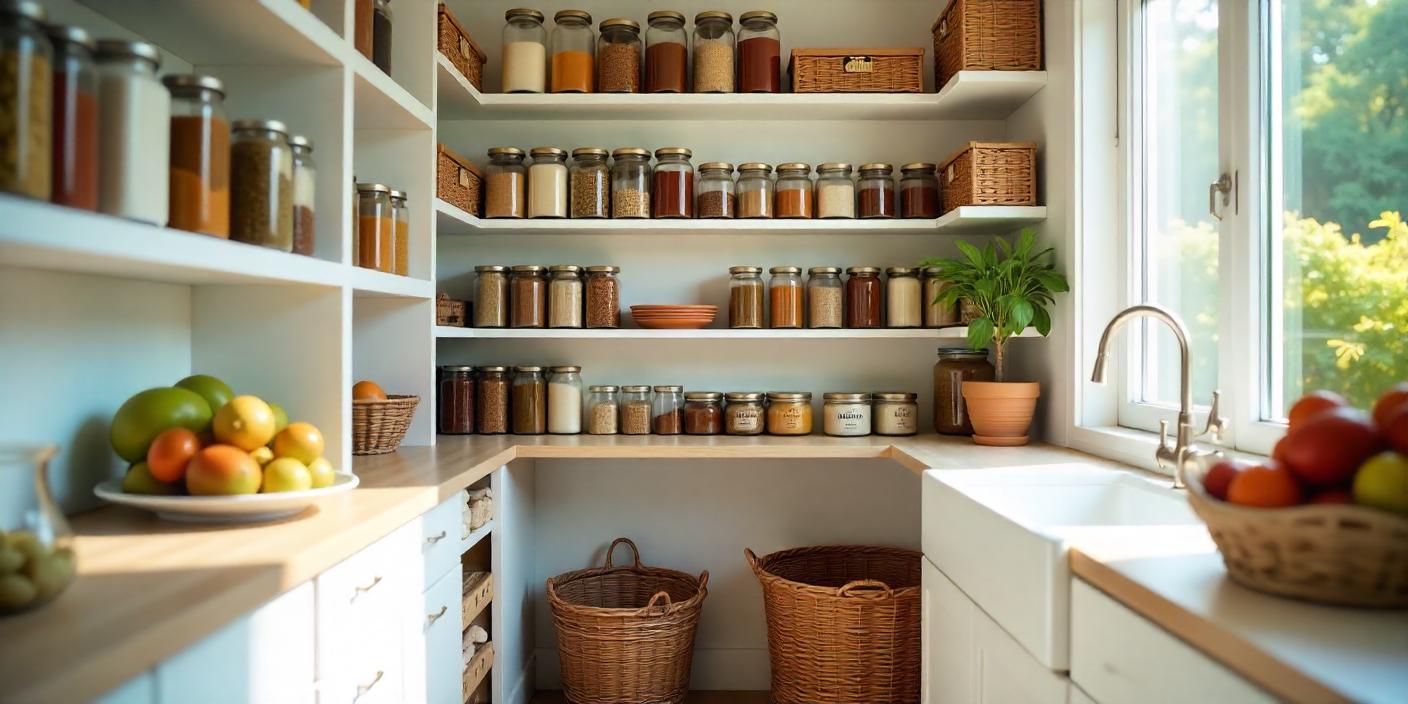
Installers mount shallow side shelves alongside a main rear shelf, creating a clear standing space that keeps every stored item visible upon entering.
Maximizing Storage in a Compact Apartment Reach-In Pantry
Small apartment kitchens require utilizing full vertical wall height from floor to ceiling.
Designers combine lower pull-out wire baskets for produce with upper tier-step organizers, maximizing storage density within compact cabinet footprints.
Outfitting a Butler’s Pantry in a Custom Executive Home
Spacious butler’s pantries feature solid hardwood cabinetry, integrated quartz countertops for small appliances, and specialized glass-front drawers.
Architects install dedicated task lighting underneath upper cabinets to provide clear prep illumination for entertaining and meal assembly.
Planning, Financial Dynamics, and Resource Management
Cost Allocation and Budgeting Strategy
Budgeting for pantry upgrades involves accounting for structural wall preparation, hardware supplies, custom millwork, and organizing accessories.
Indirect Expenses and Opportunity Costs
Failing to reinforce weak drywall before mounting heavy shelving leads to hardware failure, damaged walls, and spilled food supplies.
Investing in solid wood stud blocking during initial wall construction saves money by preventing catastrophic structural shelf collapses later.
Technical Tools, Hardware, and Support Systems
Heavy-Duty Mounting Hardware and Wall Anchors
Securing pantry shelving into wall framing requires selecting appropriate fasteners rated for high continuous static shear forces.
-
Heavy Structural Wood Screws: Fasten steel tracks directly into solid wood wall studs for maximum load capacity.
-
Toggle Bolts and Snap-Toggles: Secure track standards across hollow drywall bays when stud alignment does not match track spacing.
-
Heavy-Duty Ball-Bearing Slides: Support full-extension drawer loads up to one hundred pounds without binding or sagging.
Modular Airtight Container Systems
Decanting bulk dry goods into standardized airtight containers protects food quality while maximizing shelf volume efficiency.
Uniform square and rectangular containers stack neatly, eliminating wasted dead air space created by irregular original commercial packaging.
Risk Landscape and Environmental Failure Modes
Moisture Infiltration and Pest Intrusion
Improperly sealed bulk dry goods invite pantry moths, flour beetles, and moisture damage in humid climates.
Using airtight silicone-gasket containers blocks pest entry and prevents humidity from clumping flour, sugar, and dry spices.
Structural Wall Anchor Shearing Under Overload
Overloading wall-mounted shelves with heavy liquid cases without securing brackets to wood studs causes drywall anchor failure.
Installers must verify that main vertical track standards are screwed into solid wood studs using heavy structural screws.
Governance, Maintenance, and Systemic Adaptation
Scheduled Inventory Maintenance Protocols
Maintaining an organized pantry requires structured periodic review cycles to clear expired goods and re-adjust shelf heights.
Cleaning Protocols for Food Safety
Spilled oils, syrups, and flour dust attract pests and breed bacteria if left on wooden or painted shelf surfaces.
Installing removable, washable plastic liners on wire and wood shelves simplifies cleanup routines and protects underlying wood finishes from stains.
Measurement, Tracking, and Inventory Evaluation
Evaluating pantry efficiency involves tracking spatial volume utilization, food waste rates, and visual item clarity.
Quantitative Performance Metrics
-
Volume Utilization Efficiency: Measuring percentage of usable cubic space occupied by organized inventory.
-
Expired Goods Loss Rate: Tracking financial value of spoiled or expired food discarded during monthly audits.
-
Shelf Deflection Rate: Checking horizontal shelf sagging under full load using straightedge levels.
Qualitative Design Signals
-
Visual Search Speed: Timing how quickly household members can locate specific cooking ingredients.
-
Access Ergonomics: Verifying heavy appliances can be retrieved without awkward reaching or strain.
Common Misconceptions and Storage Myths Best Pantry Storage Options
Myth 1: Deep Shelves Are Always Better for Pantry Storage
Homeowners often believe deep twenty-four-inch shelves are superior because they hold more total food inventory.
However, deep fixed shelves hide items in dark back corners, leading to duplicate purchases, forgotten stock, and food expiration.
Myth 2: Wire Shelving Is Indestructible and Maintenance-Free
Consumers frequently assume wire shelving requires zero maintenance and handles unlimited weight.
In reality, cheap wire tracks bend under heavy canned goods, and thin vinyl coatings peel, expose metal, and rust in humid environments.
Food Safety and Environmental Sustainability
Selecting sustainable pantry storage materials involves choosing non-toxic finishes, durable natural timber, and recyclable glass packaging.
Installing low-VOC painted wood cabinets protects indoor air quality while eliminating chemical off-gassing near stored food supplies.
Choosing high-quality, recyclable materials ensures food remains safe and storage hardware stays functional for decades.
Final Synthesis
Selecting and building the best pantry storage options requires balancing structural load capacities, ergonomic reach zones, material durability, and clear inventory visibility. A well-engineered pantry transforms kitchen workflow, reduces daily food waste, and keeps household staples organized.
When architects, builders, and homeowners prioritize sturdy hardware installation, adjustable shelf heights, and durable non-toxic materials, their storage systems remain safe, efficient, and reliable for decades.