Compare Kitchen Countertop Materials: Comprehensive Architectural Surface Guide
Selecting an optimal working surface requires balancing raw geology, polymer chemistry, and physical ergonomics within residential kitchens. Food preparation demands continuous mechanical resilience, thermal tolerance, and stain resistance across every square foot. Compare Kitchen Countertop Materials. Homeowners often struggle to evaluate competing options when evaluating natural igneous rocks, engineered quartz resins, sintered compact ceramics, and wood species. Surface selection alters long-term maintenance cycles, cabinetry support specifications, and indoor environmental quality.
Evaluating material performance involves understanding physical density, liquid absorption coefficients, and flexural tensile limits. A surface chosen purely for visual appeal may fail under routine culinary stress, thermal shock, or acidic food contact. Countertop thickness profiles dictate structural subflooring reinforcement, wall ledger anchoring, and perimeter cabinet leveling requirements. Integrating sinks, cooktops, and plumbing fixtures requires precise fabrication methods to prevent point-loading stress cracks over time.
Contemporary residential architecture favors expansive prep surfaces, seamless waterfall drops, and integrated drainage channels. Meeting these design goals demands careful evaluation of slab seam placement, edge profile geometry, and resin binder stability under solar radiation. Establishing rigorous testing standards early in the project protects capital investments while ensuring long-term usability across high-traffic living environments.
Understanding compare kitchen countertop materials
Material Science and Mechanical Performance
Designers must compare kitchen countertop materials through structural physics, petrology, and polymer chemistry to establish true material value. Surface evaluation spans physical properties like Mohs mineral hardness, porosity rates, and thermal expansion coefficients. Natural stones contain internal natural fissures, mineral veining, and micro-porosity variations that alter stain absorption and structural strength. Engineered surfaces utilize acrylic or polyester binders to create non-porous slabs, though these resin binders introduce thermal sensitivity limits under direct heat exposure.
Understanding how raw materials react under daily mechanical stress prevents unexpected surface degradation. Sintered stone and ultra-compact surfaces endure high thermal shock through high-pressure ceramic firing, yet their extreme hardness makes edge profiling challenging. Solid surface materials allow seamless field welding and easy scratch repair, but their lower Mohs hardness rating increases susceptibility to surface scuffs. Analyzing these structural dynamics helps project teams align material properties with expected kitchen usage intensity.
Oversimplification and Comparative Pitfalls
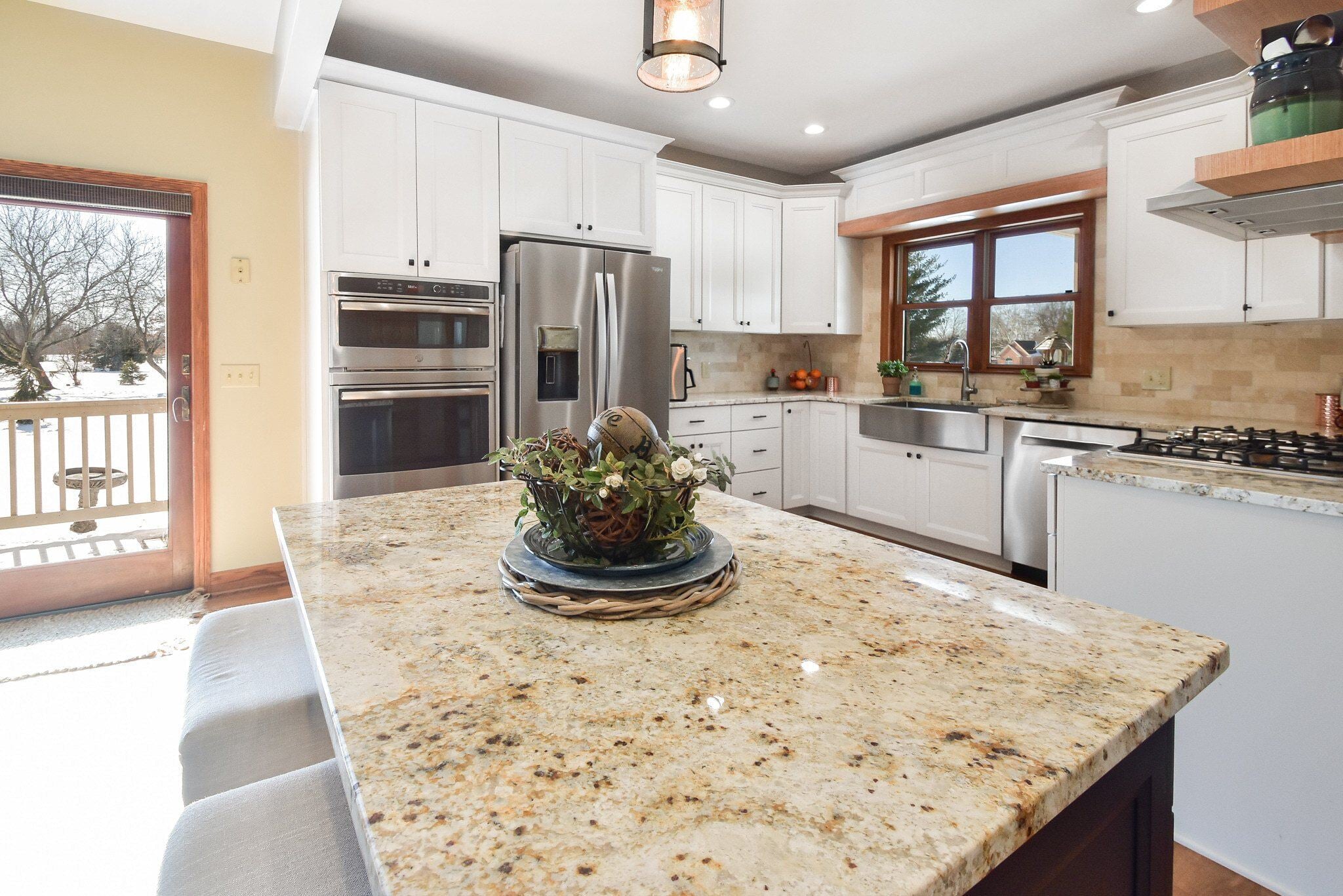
Product marketing often simplifies surface selection into binary categories like natural versus synthetic options. This broad classification ignores critical sub-varieties, such as distinguishing calcite-based marbles from quartz-rich granites or low-resin quartz composites from high-binder variants. Marble contains calcium carbonate, making it vulnerable to acid etching from lemon juice, vinegar, or wine. Granite consists of quartz and feldspar, offering high resistance to weak acids without immediate surface loss.
Assuming all stone surfaces perform identically leads to inappropriate material specification in heavy cooking zones. A material well-suited for a low-traffic butler’s pantry may fail when installed on an active island workspace. Homeowners who skip detailed petrological evaluations often face permanent etching, dark oil stains, or corner fractures. Thorough surface comparisons must account for chemical reactivity, heat transfer rates, and shear stress tolerances.
Architectural Integration and Fabrication Execution
Successful countertop installation requires precise coordination between stone fabricators, cabinetmakers, and structural framing contractors. Custom slabs are calibrated to millimeter tolerances, whereas residential timber framing exhibits natural deflection and out-of-level variations. Fabricators compensate for structural movement by incorporating flexible silicone joint beads, uncoupling underlayment membranes, and perimeter support brackets. Proper installation protects brittle stone slabs from flexural cracking caused by cabinet settling.
Fabricators utilize computer numerical control routers, bridge saws, and diamond polishing heads to execute clean cutout profiles. Sink cutouts require radius corners rather than sharp 90-degree internal cuts to prevent stress concentration points. Overlooking edge radius rules increases the risk of propagation cracks forming from cooktop corners or heavy undermount sinks. Technical coordination ensures long-term structural stability across complex countertop runs.
Historical Evolution of Countertop Surface Engineering
Early Masonry and Timber Worksurfaces
Early twentieth-century homes relied on local hardwoods, soapstone blocks, cast zinc, and unglazed tile surfaces. Kitchens functioned primarily as utilitarian service areas, prioritizing raw durability over visual uniformity. Thick butcher block tops absorbed heavy impacts but required regular treatments with mineral oil to slow moisture penetration and bacterial growth. Soapstone offered chemical resistance against acids, though its soft talc composition allowed frequent surface scratching.
Mid-Century Laminates and Synthetic Innovations
The post-war era introduced post-formed decorative laminates, revolutionizing kitchen surfaces through affordable mass manufacturing. Kraft paper saturated with phenolic resins formed lightweight, non-porous sheets glued over particleboard substrates. While laminate made colorful kitchens accessible, it lacked heat resistance and allowed moisture to swell interior wood cores when seams failed. Solid surface acrylics emerged later, providing non-porous, renewable, homogenous tops without underlying wood cores.
Contemporary Sintered Stone and Quartz Composites
Modern surface design emphasizes engineered quartz composites and ultra-compact sintered materials. Industrial presses combine pulverized natural quartz aggregates with polyester resins under vacuum pressure, producing non-porous slabs with uniform patterning. Sintered ceramics push performance further by fusing natural minerals under extreme pressure and temperature without synthetic resin binders. These advanced production methods create surfaces that resist extreme heat, ultraviolet radiation, and deep chemical staining.
Core Conceptual Frameworks and Material Dynamics
The Porosity-Maintenance Continuum Framework
The relationship between fluid absorption rates and maintenance needs forms a clear operational framework for countertop materials. Liquid absorption directly correlates with maintenance requirements and biological hygiene. Porous stones like marble, limestone, and unsealed granite contain microscopic pores that draw liquids in via capillary action. Acidic or colored liquids leave permanent deep stains unless blocked by impregnating fluoropolymer sealers. Non-porous surfaces like quartz, sintered stone, and solid surface eliminate capillary absorption, removing the need for topical or penetrating sealers.
The Thermal-Mechanical Resilience Model
Every countertop material exhibits a distinct balance between thermal tolerance and impact resistance. Understanding these physical limits prevents surface failure around cooktops and work zones.
-
Ultra-Compact Sintered Surfaces: Superior thermal shock resistance up to 1,000°F; high scratch resistance; moderate brittle impact sensitivity along unsupported edges.
-
Engineered Quartz Composites: High scratch and impact resistance; moderate thermal tolerance capped at 300°F due to resin binder discoloration risks.
-
Natural Igneous Granite: Excellent heat resistance up to 800°F; high scratch resilience; moderate impact absorption along natural veining lines.
-
Acrylic Solid Surfaces: Moderate heat resistance capped at 210°F; low scratch resistance; high impact flexibility and full field repairability.
The Lifecycle Value and Renewable Surface Framework
Evaluating countertop value requires comparing short-term installation costs against long-term repairability and service lifespans.
-
Renewable Surfaces: Solid surface and thick timber butcher block allow field sanding, scratch removal, and edge re-profiling without replacing the underlying slab.
-
Non-Renewable Hard Surfaces: Sintered stone and quartz resist everyday wear but require specialized diamond polishing or factory replacement if severely chipped or cracked.
-
Age-Patina Surfaces: Soapstone, unsealed marble, and copper develop rich surface patinas, scratches, and color shifts that record history rather than reflecting surface failure.
Primary Surface Categories and Trade-Off Analysis
Selecting an appropriate countertop requires evaluating physical material attributes against daily kitchen demands. Every material category offers distinct trade-offs across stain resistance, heat tolerance, edge strength, and long-term repairability.
Surface Category Characteristics
| Material Category | Composition & Structure | Thermal Resilience Limit | Stain Resistance Rating | Mohs Hardness Scale | Repairability Profile |
| Engineered Quartz | 90-93% Quartz, 7-10% Resin | Up to 300°F (149°C) | High (Non-porous) | 6.0 – 7.0 | Difficult (Resin fill) |
| Sintered / Porcelain | Metamorphic natural minerals | Up to 1,200°F (648°C) | Superior (Zero absorption) | 7.0 – 8.0 | Very Difficult (Slab swap) |
| Natural Granite | Igneous quartz and feldspar | Up to 800°F (426°C) | Moderate to High (Sealed) | 6.0 – 7.0 | Moderate (Epoxy color blend) |
| Calcite Marble | Metamorphic calcium carbonate | Up to 600°F (315°C) | Low (Acid sensitive) | 3.0 – 4.0 | Moderate (Honing/Polishing) |
| Solid Surface | Acrylic / Polyester polymers | Up to 210°F (99°C) | High (Homogenous) | 2.0 – 3.0 | Excellent (Full field sand) |
| Hardwood Block | End/Edge grain hardwood timber | Up to 250°F (121°C) | Low to Moderate (Oiled) | 2.0 – 4.0 | High (Refinishing / Sanding) |
Material Decision Logic
Choosing an optimal countertop requires evaluating functional cooking habits alongside structural room limitations. Active home cooks who place hot cast-iron cookware directly on counters benefit from natural granite or sintered compact ceramics. Families prioritizing low maintenance and easy cleanup often choose engineered quartz or solid surfaces to eliminate routine sealer treatments.
Architectural configurations with large overhangs or cantilevered seating areas require evaluating flexural material strength. Solid quartz and granite slabs require steel support brackets when overhangs exceed 10 to 12 inches. Brittle sintered ceramics need full subfloor substrate plywood backing to prevent edge breakage under heavy point loads. Balancing aesthetic choices with physical structural limits yields safe, long-lasting countertop installations.
Real-World Implementation Scenarios Compare Kitchen Countertop Materials
Scenario 1: High-Volume Commercial-Style Home Kitchen
A passion-driven culinary enthusiast needs a heavy-duty countertop system capable of handling hot pans, raw ingredients, and frequent knife work.
-
Initial State: Outdated laminate counter with swollen seams around the undermount sink.
-
Target State: Industrial-grade workspace combining heat-tolerant perimeter surfaces with a central prep zone.
-
Operational Constraints: Existing base cabinetry must support heavy slab loads without structural sagging.
-
Critical Execution Steps: Contractors install 3cm natural granite along perimeter cooking zones to handle hot cookware up to 800°F. They anchor an end-grain maple butcher block over the central prep island for knife work. Subflooring gets reinforced with additional floor joist blocking beneath the main island footprint.
-
Potential Failure Points: Water penetrating the butcher block boundary triggers wood swelling and glue joint separation.
-
Secondary Impact: Heavy natural granite slabs require installing structural cabinet corner blocks to handle high static loads.
Scenario 2: Modern Open-Concept Waterfall Island Integration
A luxury residential renovation features a continuous waterfall island where top slabs flow seamlessly into vertical end panels.
-
Initial State: Standard framed island with exposed wood paneling along side walls.
-
Target State: Seamless 3cm engineered quartz island with mitered waterfall drops on both ends.
-
Operational Constraints: The existing concrete slab floor exhibits a 3/8-inch slope across the island footprint.
-
Critical Execution Steps: Installers level the base cabinetry using high-density composite shims. Fabricators cut 45-degree mitered edges using CNC waterjets to align stone veining across vertical seams. Installers secure miter joints using color-matched epoxy resins and hidden steel structural brackets.
-
Potential Failure Points: Subfloor movement causes vertical mitered seams to separate or crack along outer edges.
-
Secondary Impact: Adding mitered waterfall panels increases overall fabrication labor costs by 35 to 50 percent.
Financial Allocation and Resource Dynamics
Budgeting for kitchen countertops requires evaluating raw material costs, precision fabrication fees, edge profiling labor, and structural support prep work. Investing in high-grade materials without allocating budget for skilled fabrication increases installation risk.
Typical budget distribution across countertop projects follows a structured pattern:
-
Raw Slab Procurement: 35% – 45%
-
Precision Fabrication & Cutting: 30% – 40%
-
Edge Profiling & Polishing: 10% – 15%
-
On-Site Installation & Fitting: 10% – 15%
Comprehensive Cost Dynamics
| Material Category | Installed Cost Range (per sq ft) | Annual Maintenance Expense | Expected Useful Service Life |
| Plastic Laminate | $25 – $50 | $0 – $10 (Low) | 8 – 12 Years |
| Solid Surface | $50 – $90 | $15 – $30 (Low) | 15 – 20 Years |
| Engineered Quartz | $65 – $140 | $0 – $15 (Very Low) | 25+ Years |
| Natural Granite | $60 – $150 | $20 – $50 (Sealer needed) | 30+ Years |
| Calcite Marble | $80 – $220 | $40 – $100 (Frequent polish) | 30+ Years (Patina forms) |
| Sintered Ceramic | $90 – $250 | $0 – $10 (Very Low) | 30+ Years |
Structural modifications significantly impact total project investments. Installing cantilevered waterfall drops or heavy natural stone slabs requires solid cabinet box construction. Specifying complex edge profiles—such as ogee or triple pencil edges—increases fabrication labor fees compared to standard eased or bevel edges.
Material Assessment Tools and Testing Protocols
Evaluating surface performance before buying requires testing physical samples against everyday kitchen stresses and chemical agents.
-
Mohs Hardness Mineral Picks: Hardness picks evaluate scratch resistance by scratching sample surfaces with calibrated mineral points.
-
Acid Reactivity Drops: Applying lemon juice or vinegar drops tests marble and limestone samples for chemical etching sensitivity.
-
Oil Absorption Stain Checks: Leaving olive oil drops on unsealed samples for 24 hours reveals porosity and sealer performance.
-
Thermal Shock Heating Pads: Controlled heating elements verify whether quartz resins discolor or crack under localized heat.
-
Digital Colorimeters: Precision color tools measure color consistency across multiple stone slabs before cutting.
-
Water Absorption Immersion Tests: Measuring dry versus soaked sample weights determines total water absorption rates.
Risk Landscape and Structural Failure Modes
Countertop performance failures stem from uncorrected subfloor slope, poor support framing, or improper fabrication practices.
Cabinet Unlevelness and Slab Cracking
Setting heavy stone slabs over unlevel base cabinets causes unsupported span deflection. Subjecting these unlevel surfaces to heavy point loads triggers stress cracks across vulnerable sink cutout corners.
Thermal Shock and Resin Yellowing
Placing high-temperature cookware directly onto engineered quartz creates thermal shock within the polymer matrix. Exceeding 300°F breaks down synthetic polyester binders, causing permanent surface yellowing and micro-fissuring.
Acid Reactivity and Marble Etching
Exposing calcite-based marble to acidic food substances initiates chemical degradation of calcium carbonate. This acid exposure dissolves surface polish, creating dull, un-polishable etch marks across glossy tops.
Maintenance Protocols and Surface Adaptation
Preserving countertop utility requires setting regular cleaning schedules, applying protective sealers, and re-polishing worn surfaces over time.
Surface Care Checklist
Initial Post-Installation Phase
-
[ ] Apply deep-penetrating fluoropolymer sealer over porous natural granite and marble slabs.
-
[ ] Check color-matched epoxy seams along mitered waterfall drops and corner joints.
-
[ ] Verify undermount sink support clips hold the sink rim firmly against the countertop underside.
Annual Maintenance Review
-
[ ] Test natural stone porosity by placing water droplets on high-use prep areas.
-
[ ] Inspect silicone expansion joints along wall backsplash junctions for adhesive separation.
-
[ ] Buff light scratches out of solid surface tops using fine abrasive pads.
Long-Term Adaptation Phase
-
[ ] Re-seal natural granite and quartzite surfaces using penetrating impregnating sealers.
-
[ ] Hone etched marble surfaces using diamond-impregnated polishing pads to restore consistent sheen.
-
[ ] Treat hardwood butcher block counters with food-safe mineral oils and beeswax compounds.
Performance Evaluation and Material Metrics
Evaluating countertop durability requires monitoring leading and lagging performance indicators over years of daily kitchen use.
Leading indicators evaluate initial material readiness (such as sealer coverage, seam tightness, and perimeter levelling). Lagging indicators track long-term wear patterns (such as stain resistance retention, gloss level shifts, and seam separation).
Operational Performance Metrics
| Performance Metric | Metric Category | Target Performance Standard | Failure Variance Indication |
| Water Droplet Beading Time | Leading Indicator | Water beads cleanly for over 15 minutes | Immediate absorption indicates sealer failure |
| Seam Gap Width Tolerance | Leading Indicator | Seam gaps remain under 1/64-inch (0.4mm) | Gap expansion indicates subfloor settling |
| Mohs Scratch Threshold | Leading Indicator | Surface resists steel blade scratching (Mohs 5.5) | Surface scratching indicates low mineral density |
| Gloss Level Retention | Lagging Indicator | Gloss values remain within 5% of initial installation | Sheen loss signals chemical etching or wear |
Documenting maintenance treatments, storing leftover slab remnants for repairs, and tracking surface performance helps homeowners maintain durable countertops for decades.
Persistent Surface Misconceptions Compare Kitchen Countertop Materials
Myth 1: Quartz countertops are completely indestructible and heat-proof.
Polyester resin binders in quartz composites degrade under direct heat, causing discoloration, yellowing, and thermal shock cracks when exposed to hot pans. Placing hot cookware onto unprotected quartz surfaces breaks down synthetic polymers rapidly.
Myth 2: Granite never requires sealing after factory installation.
Granite porosity varies widely by quarry origin; dark granites are naturally dense, whereas light-colored granites need regular sealing to prevent oil staining.
Myth 3: Quartzite and quartz are identical engineered materials.
Natural quartzite is a metamorphic sandstone rock mined from quarries, whereas engineered quartz is a manufactured slab combining crushed minerals with polymer resins.
Myth 4: Etching on marble is identical to surface oil staining.
Staining involves liquid absorption into porous stone pores, whereas etching is a chemical reaction that dissolves surface calcium carbonate, leaving dull, rough marks.
Ethical, Practical, and Environmental Considerations
Sourcing countertop materials involves assessing quarrying impact, silica exposure safety during fabrication, and end-of-life recycling options. Transporting heavy natural stone slabs across international supply chains consumes significant transport energy compared to regional manufacturing. Overseas granite and marble quarrying alters natural landscapes and generates substantial carbon emissions during transoceanic shipping.
Engineered resin fabrication presents distinct occupational health challenges that demand strict manufacturing oversight. Processing engineered quartz slabs generates ultrafine crystalline silica dust that requires mandatory wet-cutting machinery and HEPA-filtered air extraction systems to protect factory operators. Homeowners can improve sustainability by choosing regional stone options, reclaimed timber blocks, or recycled glass surfaces. Selecting durable materials reduces landfill waste by avoiding frequent countertop replacements during home renovations.
Architectural Synthesis and Strategic Conclusion
Selecting an optimal kitchen countertop requires balancing material physics, structural cabinet limits, and long-term maintenance requirements. Project teams must compare kitchen countertop materials through structural strength, chemical sensitivity, thermal tolerance, and total lifecycle costs. Matching physical surface properties with household cooking habits produces durable, functional kitchen spaces.
Successful countertop installations combine sound subfloor prep, accurate slab fabrication, proper edge selection, and routine maintenance protocols.
Careful planning prevents structural failures, seam separations, and surface etching during daily kitchen use. Investing time in petrological assessment, sample testing, and installer vetting protects capital investments and ensures kitchen surfaces deliver lasting value.